Sound familiar? “New hires spend their first weeks chasing access and hunting for information.”
More on our customer experience work →
Research report synthesizing 167 survey responses and multi-geography stakeholder interviews, including three persona journey maps (New Hire, Manager, Content Publisher), a modular onboarding blueprint, and UX concepts for desktop and mobile.
Impact
34% reduction in new hire support tickets within first 90 days
Research surfaced five systemic onboarding failures affecting 130,000+ employees across geographies and divisions
Problem
A leading pharmaceutical and medical technology company with 130,000+ employees across multiple global divisions had an onboarding process that was fragmented, manual, and inconsistent. New hires lacked system access for days or weeks. Critical information was scattered across email threads, spreadsheets, Teams messages, and SharePoint documents. Onboarding checklists were static and unprioritized. Managers had no visibility into where new hires were stuck. And support was so unclear that employees defaulted to ad-hoc phone calls and help tickets. The organization needed an independent research initiative to surface the full scope of the problem before investing in a solution.
Approach
Conducted surveys with 167 new hires across business sectors, job types, and geographies
Conducted 1:1 interviews with new hires and managers from diverse business units and global regions
Mapped the onboarding experience across three key personas: New Hire, Manager, and Content Publisher
Synthesized findings into a structured UX research report with categorized pain points and prioritized opportunities
Created journey maps and modular onboarding concepts for desktop and mobile
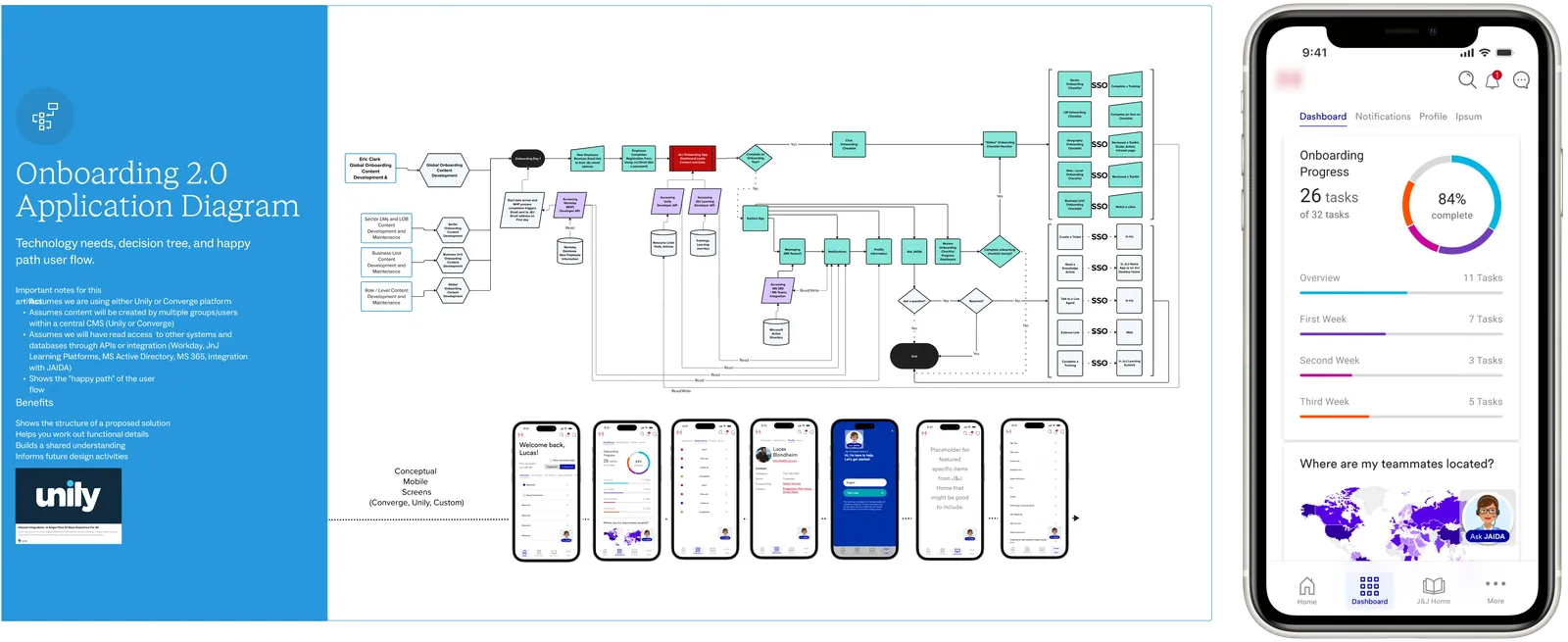
Proposed a personalization and system architecture using Unily and Workday integration
Solution
An attribute-driven onboarding experience built within the firm's existing technology stack. Key recommendations included sequenced onboarding checklists driven by Workday and SSO data, a dashboard-style onboarding app in the Unily environment, role-based content management permissions, integration with the firm's existing AI assistant, and structured progress visibility for both managers and new hires. The report gave the organization a clear, research-backed blueprint for where to invest and in what order.
More Case Studies
 SF Commerce Cloud
Experience Strategy and B2B Portal Modernization for a Global Bicycle OEM
SalesforceMobile UX